The National Education Union (NEU)
@NEUnion


Opportunities exist across primary and secondary schools, further education, specialist and SEND provision, and vocational training. For service leavers, teaching can offer the chance to use both professional expertise and leadership experience to help develop the next generation.
What do teachers do?
Teachers play a central role in children and young people’s educational, social and personal development. In England alone, there are almost 24,500 schools educating more than 8.9 million pupils, across primary, secondary, special, alternative and independent settings.
The role involves much more than delivering lessons. Teachers typically:
Primary teachers usually teach several subjects and have responsibility for the wider development of one class, while secondary teachers normally specialise in a particular subject. Other opportunities include SEND teaching, further education, sixth-form teaching, alternative provision and vocational education.
Good teaching therefore combines subject knowledge with communication, organisation, leadership, patience and the ability to motivate and support young people.
Transferable skills
A career in the Armed Forces can develop many of the qualities required in teaching, particularly if you have been involved in training, instruction, mentoring or leadership.
Transferable skills can include:
These skills map well onto teaching, where professionals are expected to plan lessons, adapt teaching to pupils’ needs, manage behaviour, assess progress and motivate learners. Your Service experience will not replace the qualifications required for many teaching roles, but it can provide strong evidence of the professional skills needed to succeed in the classroom.
How do I get qualified to work in teaching?
There are several routes into teaching, depending on your existing qualifications and whether you want to teach at primary or secondary level. In England, the key professional qualification is Qualified Teacher Status (QTS).
For graduates, the most common route is postgraduate initial teacher training, usually lasting around one academic year. Courses may award QTS only or QTS with a Postgraduate Certificate in Education (PGCE). A PGCE is an academic qualification; it is QTS that gives you qualified teacher status.
Other routes include:
Postgraduate teacher training normally requires a bachelor’s degree or equivalent, plus GCSE grade 4/C or above in English and maths, and science if you want to teach primary. Secondary trainees usually need sufficient knowledge of the subject they intend to teach; some providers may recommend a subject knowledge enhancement course before training begins.
QTS is currently required to teach in local-authority-maintained primary, secondary and special schools in England. Academies, free schools and independent schools currently have more flexibility, although from September 2027 new teachers in state primary and secondary schools will generally need QTS or be working towards it.
Teacher-training requirements differ in Scotland, Wales and Northern Ireland, so service leavers should check the rules for the part of the UK in which they intend to work.
Use your ELC
Utilize the ELC scheme for courses related to teaching, ensuring they're offered by approved providers on the ELCAS website. Check out Quest's comprehensive guidance on maximizing your ELC benefits.
Finding a job
Once qualified, teaching opportunities exist across primary and secondary schools, special educational needs and disabilities (SEND) settings, alternative provision, sixth forms and further education. Vacancies are advertised through individual schools, academy trusts, local authorities and the Government’s Teaching Vacancies service.
For service leavers, experience in training, leadership, mentoring and working within structured organisations can be particularly relevant. There may also be opportunities in pastoral support, school leadership, administration, cadet programmes and schools with strong links to the Armed Forces community.
Demand varies by subject and region. Recruitment remains more challenging in several secondary subjects, including maths, physics, chemistry, computing and modern foreign languages, although the overall teacher recruitment picture has improved in some areas. With experience, teachers can progress into subject or department leadership, pastoral roles, SEND leadership, deputy headship, headship, teacher training or education consultancy.
MORE THAN JUST CLASSROOM INSTRUCTION
In addition to traditional classroom roles, the sector offers:
Tutoring services.
Online education.
Curriculum design.
Supporting these areas requires expertise in:
Content creation.
Technical roles for e-learning platforms.
Administration and managerial positions.
TRANSFER YOUR SKILLS
Contemplating a role in teaching? These skills could prove beneficial:
Mastery over the subject.
Patience and adaptability.
Effective communication.
Classroom management.
Tech-savviness for modern educational tools.
Apprenticeships provide pathways into numerous careers in the education sector, presenting a valuable chance to earn, accumulate hands-on teaching experience, and attain nationally recognized qualifications concurrently. The National College for Teaching and Leadership (NCTL): As a part of the Department for Education, the NCTL would have information about teacher training, including apprenticeships. Teach First, specifically focuses on a unique type of teacher training program, which is somewhat akin to an apprenticeship. Graduates commit to teaching in challenging schools, and they receive training and qualifications in return.The Times Educational Supplement (TES) is primarily a resource and job listing site, they often have information about teaching apprenticeships or similar training programs available through their job listings.
Contact them direct (see ‘Useful info’) for full details.
The National Education Union (NEU)
@NEUnion
The National Association of Head Teachers (NAHT)
@NAHTnews
Teach First
@TeachFirst
The National College for Teaching and Leadership (NCTL)
www.gov.uk/government/organisations/national-college-for-teaching-and-leadership
@educationgovuk (as it's a part of the Department for Education)
The Times Educational Supplement (TES)
@tes
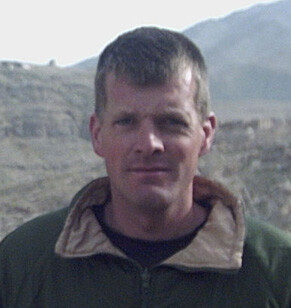
Final Rank:Electrical specialist
Time Served:24 Years
After a distinguished 24-year career in the British Army, Gary Evans has successfully transitioned into a rewarding second career in Further Education (FE).
- Featured Advertisers -